
C207 Task 2 Tutor: Decision Tree Analysis Tutoring for QUM3

If you’re looking for a C207 Task 2 tutor, you’re probably past the point of just reading the assignment instructions again. Maybe the expected value math makes sense in isolation but you can’t see how it folds back through the tree. Maybe you understand your own dataset but freeze up writing the D1 explanation. Maybe you’ve never built a decision tree before and the whole structure feels unfamiliar. Tutoring is built for exactly that gap, the space between “I’ve read the instructions” and “I actually know how to do this.”
This page covers what a C207 Task 2 tutor actually helps with, what a tutoring session typically looks like, how tutoring is different from a one-time draft review, and what to look for before you commit to any tutoring service.
What Does a C207 Task 2 Tutor Actually Help With?
A tutor’s job on this assignment isn’t to hand you your dataset’s answers, your numbers are specific to your student ID and no outside tutor has access to them ahead of time. What tutoring actually covers:
- The decision tree method itself. How state-of-nature nodes work, how payoffs and probabilities combine into an expected value, and how that folds back through the tree to compare alternatives.
- Reading your own scenario correctly. Making sure you understand what your specific scenario is asking before you touch the numbers.
- Structuring the written report. Understanding what belongs in a business question (A1), a technique justification (A2), an expected value explanation (D1), and a limitations discussion (D2), and why each one is graded differently than it might look at first glance.
- Working through your calculations with you. Not doing the math for you, but walking through the process on your own numbers until the method clicks.
- Explaining, not just calculating. The rubric cares as much about whether you can explain your process as whether your numbers are right; a tutor can help you practice putting that explanation into words.
What to Look for in C207 Task 2 Tutoring
| Quality | Why It Matters |
|---|---|
| Familiarity with WGU’s competency-based format | Tutoring for a traditional class doesn’t always translate; WGU assessments are graded against a specific rubric, not a general impression |
| Understanding of decision tree analysis specifically | Generic “statistics tutoring” may not cover expected value and decision trees in the depth this task needs |
| Willingness to explain the method, not hand over answers | A tutor who offers to just fill in your numbers isn’t tutoring, and it puts your submission at risk |
| Session structure that lets you ask questions | One-directional explanation without room for your specific confusion doesn’t move you forward as fast |
| Clear, transparent pricing | No surprise costs partway through |
| No guaranteed grade | Nobody can ethically promise a specific outcome; tutoring improves your understanding, not your grade directly |
How a C207 Task 2 Tutoring Session Typically Works
A useful tutoring session on this task tends to follow a similar shape regardless of who’s running it:
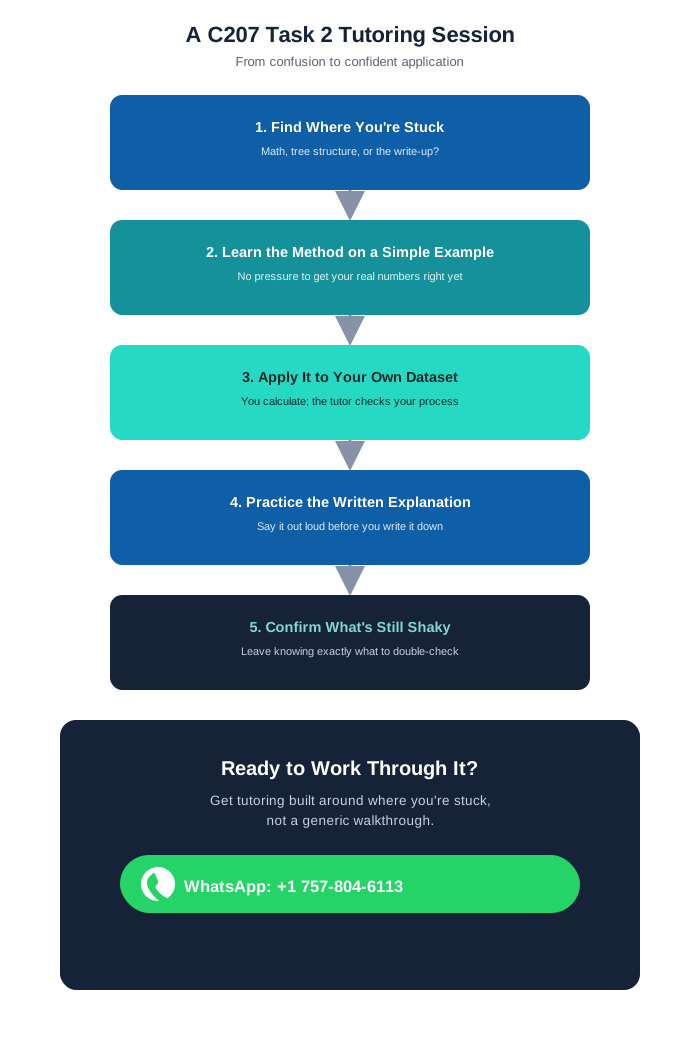
- Figure out where you’re actually stuck. Is it the math, the structure of the tree, the writing, or just not knowing where to start? These need different approaches.
- Walk through the method on a simple example first. Working the process on numbers that aren’t your actual dataset removes the pressure of “getting it right” while you’re still learning the steps.
- Apply it to your own scenario, with you doing the work. Once the method makes sense, you work through your own dataset while the tutor checks your process, not your outcome.
- Practice the explanation. Say out loud, or write out, why each part of your tree is structured the way it is; this is usually the part that separates a technically correct D1 from a weak one.
- Identify what’s still shaky. End the session knowing specifically what to double-check before you submit, not just a vague sense of “I think I get it now.”
C207 Task 2 Tutoring vs. a Draft Review
These aren’t the same service, and it’s worth knowing the difference before you decide what you need.
| Tutoring | Draft Review |
|---|---|
| Best when you don’t yet understand the method | Best when you’ve already built something and want it checked |
| Focuses on building your understanding | Focuses on catching gaps in a finished draft |
| Happens before or during your work | Happens after you have a draft |
| Teaches you to apply the process yourself | Confirms whether your applied process holds up against the rubric |
Some students only need one or the other; some benefit from both, tutoring first to understand the method, then a review once the draft is done. If you already have a full draft and mainly want it checked, our C207 Task 2 Help page covers rubric-focused review specifically.
Why Students Look for a C207 Task 2 Tutor
A few reasons come up consistently:
- The expected value math is new. If you haven’t worked with probability-weighted payoffs before, the concept doesn’t always click from reading alone.
- The tree structure is confusing. Knowing which nodes represent decisions versus which represent chance events, and how that shapes the diagram, takes some getting used to.
- Writing the explanation is harder than doing the math. Plenty of students can calculate an expected value correctly but struggle to explain the process in the way D1 requires.
- Limited time. Working full time while studying means every hour spent confused is an hour you don’t have to spare; a focused tutoring session can shortcut a lot of trial and error.
- English isn’t a first language. Some students understand the math clearly but want extra support translating that understanding into the specific written explanation the rubric expects.
- Math anxiety. For some students, the barrier isn’t ability, it’s confidence; working through the method with someone else can break that cycle faster than struggling alone.
Research on tutoring in higher education backs up why this works: a 2023 field experiment on tutoring in online higher education found measurable improvements in student performance tied to structured tutoring support, and a 2024 meta-analysis of peer tutoring programs in higher education found a consistent positive effect on academic performance across a wide range of program types. Tutoring isn’t a shortcut around learning the material, it’s a documented way to learn it faster and more confidently.
Is a C207 Task 2 Tutor Right for You?
A quick self-check:
- I don’t fully understand how expected value calculations fold back through a decision tree
- I’m not sure which nodes in my tree should represent decisions versus chance events
- I can do the math but struggle to explain my process in writing
- I’ve never built a decision tree before and want to understand the method before I start
- I’m confident in the math and structure, and mainly want my finished draft checked against the rubric
If most of your checks are in the first four, tutoring is likely the better starting point. If it’s mainly the last one, a draft review may get you there faster.
C207 Task 2 Tutoring: What Support Looks Like
Tutoring through Employed Scholar for C207 Task 2 focuses on building your understanding of the decision tree method so you can apply it confidently to your own dataset. That includes walking through expected value calculations step by step, clarifying tree structure, and helping you practice explaining your process the way the rubric expects. You do the calculation and the writing; the tutoring session is there to make sure you understand what you’re doing and why, before you submit.
C207 Task 2 Tutor FAQ
What does a C207 Task 2 tutor do?
Helps you understand the decision tree method, expected value calculations, and how to structure your written explanation, working through the process with you rather than providing finished answers.
Can a tutor see my actual C207 Task 2 dataset in advance?
No. Your dataset is assigned based on your student ID and isn’t visible ahead of time. Tutoring works by teaching the method so you can apply it correctly to your own numbers.
What’s the difference between C207 Task 2 tutoring and a review?
Tutoring focuses on building your understanding before or during your work; a review checks a finished draft against the rubric. Some students need one, some need both.
How long does C207 Task 2 tutoring take?
It depends on where you’re starting from. Understanding the core method typically takes less time than working through your full write-up, since the writing and explanation piece is often where more time gets spent.
Is C207 Task 2 tutoring the same as someone doing my assignment for me?
No. Tutoring teaches you the method and helps you apply it to your own work; it doesn’t involve someone completing your assessment or providing your dataset’s specific answers.
Do I need tutoring if I already understand decision trees?
Not necessarily. If you’re confident in the method and structure, a draft review before submission may be more useful than a full tutoring session.
How do I get started with C207 Task 2 tutoring?
WhatsApp +1 757-804-6113 with where you’re stuck, whether that’s the math, the tree structure, or the written explanation, and go from there.
Sources & References
- Hardt, D., Nagler, M., & Rincke, J. (2023). Tutoring in (online) higher education: Experimental evidence. Economics of Education Review, 92, 102350. Field experiment on the impact of structured tutoring on student performance in higher education.
- The Impact of Peer Tutoring Programs on Students’ Academic Performance in Higher Education: A Meta-analysis (2024). The Asia-Pacific Education Researcher. Peer-reviewed meta-analysis on the effect of peer tutoring programs on academic performance across higher education settings.
- Schuyler, J. R., “Analyze Project Decisions: Decision Trees for Complexity”, Project Management Institute. Background on decision tree structure and expected value calculation.
- Hulett, D. T., “Decision Tree Analysis for the Risk Averse Organization”, Project Management Institute. Background on decision tree analysis’s link to expected monetary value.
Related Content
- C207 Task 2 Help, for rubric-focused review of a finished draft.
- C207 Task 2 Guide, a full worked example of the decision tree method.
- C207 Course Roadmap, for the full course sequence.